Oil shock update: Will the US-Israeli war on Iran make Russia richer?

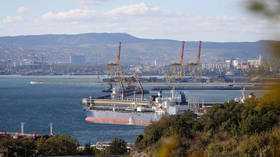
The US-Israeli war with Iran has unleashed two consequences that policymakers in Washington have long tried to avoid: a global energy crisis and the flow of more oil revenue into Russia’s coffers. For the first time in history, Russia’s Urals crude is trading above the Brent benchmark.
What has the war done to oil prices?
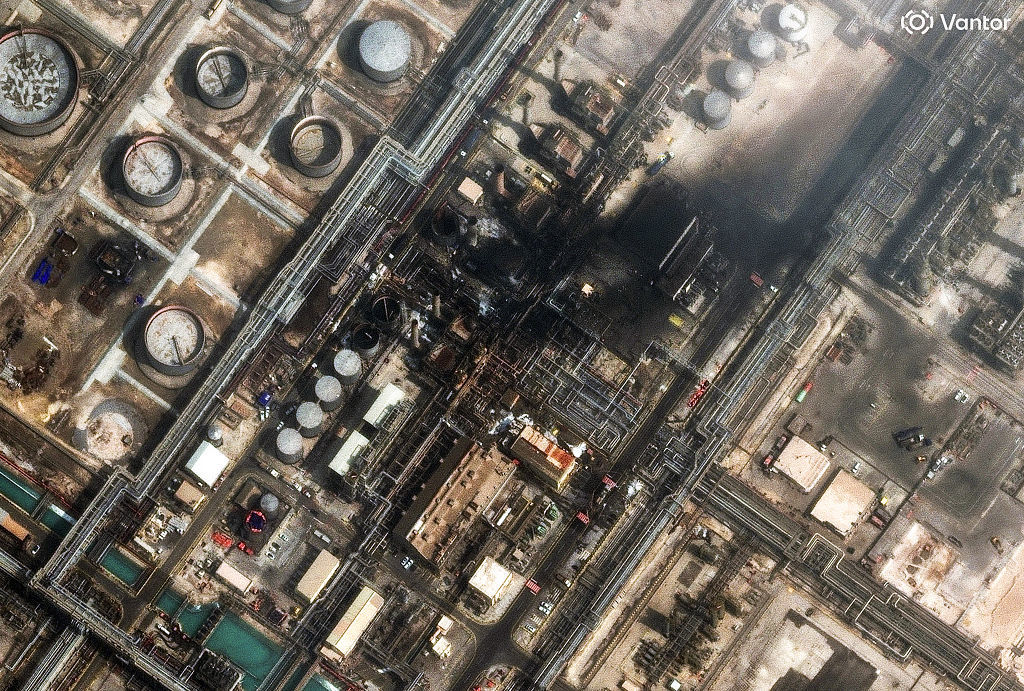
Donald Trump and Benjamin Netanyahu couldn’t have chosen a more dangerous region in which to start a war. Around 40% of the world’s oil comes from the Middle East: from Iran, where Israel has escalated strikes against oil infrastructure, apparently without the Pentagon’s consent, and from Iraq and the Gulf states, where oilfields and refineries are within range of Iran’s missiles and drones.
Roughly 20% of the world’s seaborne crude oil transits the Strait of Hormuz, a waterway less than 40 km wide at its narrowest point. Through a combination of Iranian attacks on tankers and hesitance by Western insurers, it is de-facto closed to maritime traffic. Insurance companies have hiked war risk premiums sharply, making the strait the most expensive waterway globally. According to Euronews, for a tanker valued at $120 million, a normal premium of approximately $40,000 would now cost between $600,000 and $1.2 million for a single trip.
With no way to bring their oil to market and storage facilities full, the Gulf states have one by one wound down production. Kuwait halted some extraction on Friday, following the lead of Iraq and the UAE last week.
As a result, Brent oil prices – which serve as a benchmark for 80% of the world’s crude oil – soared to $119 per barrel on Sunday night before settling back at $91 on Monday. Nevertheless, this still represents an increase of almost $20 since February 27, the day before the war began.
Does this increase benefit Russia?
Russia is the world’s third-largest oil producer, behind the US and Saudi Arabia, pumping 10.75 million barrels per day – roughly 11% of global supply. The country currently holds a crucial advantage: it is not a participant in the ongoing war in the Persian Gulf and does not depend on the Strait of Hormuz to bring its oil to market.
Russia’s benchmark export crude blend, Urals, has pushed far above the Western-imposed price cap of $60 per barrel – up 66.48% over the past month and 49.16% year-on-year, according to Trading Economics data based on the March 13 Urals price of $ 93.58 per barrel.
The price of Russian crude delivered to India hit a record high after the US widened its sanctions waiver last week, reaching $98.93 a barrel on India’s west coast on Friday, March 13. Bloomberg, citing Argus Media data, reported that this delivered price – which includes shipping costs – is the highest since Russia redirected crude exports to India following the escalation of the Ukraine conflict in February 2022.
By early March, Urals had topped Brent prices at Indian ports, with importers paying $4 to $5 more per barrel for the Russian product, according to Reuters – a highly unusual state of affairs. Unlike Brent, Urals lacks a deep futures market, so pricing is derived mainly from physical cargo trades and published assessments rather than exchange trading.
Kremlin spokesman Dmitry Peskov said on Monday, March 16, that rising global oil prices could boost revenues for the Russian budget, with oil companies selling at current market prices generating additional income as a result.
Hampered by sanctions, Russia’s oil and gas companies paid around $5.5 billion into the state budget in February, down 44% year-on-year. Alfa Bank now predicts that oil and gas revenues could reach $11.4 billion in March, even assuming a modest price of $60 per barrel.
How is the West reacting?
Rising Russian oil revenues represent a nightmare scenario in Washington and Brussels. “When the oil price goes up, it actually benefits Russia to fund its war,” the EU’s chief diplomat, Kaja Kallas, said last week. Kallas called on the bloc’s member states to approve its 20th package of sanctions against Russia in response, which includes a ban on any services supporting Russian maritime oil exports.
In a similar bid to squeeze Moscow’s revenues, US President Donald Trump imposed a 50% tariff on India, promising to reduce this levy if Russia stopped importing Russian oil and weapons. Now, facing a global energy crisis that will almost certainly harm the Republican Party in this year’s midterm elections, Trump granted India a 30-day waiver on Thursday, allowing it to continue to purchase Russian oil.
NEW: Treasury Secretary Scott Bessent says the U.S. has given India permission to use Russian oil and they may remove sanctions on other oil to provide temporary relief to the market. pic.twitter.com/XN6iKM7xAe
— The ₿itcoin Therapist (@TheBTCTherapist) March 6, 2026
The waiver was described by US Treasury Secretary Scott Bessent as a “stopgap measure,” but New Delhi insists it never needed Trump’s permission. “India will buy oil from wherever it is available,” India’s Press Information Bureau stated. “India has never depended on permission from any country to buy Russian oil.”
Will prices keep rising?
In the short term, Trump aims to cushion the economic impact of the war by getting as much oil to market as possible. Waiving sanctions on India aids this goal, as do rumored decisions by G7 leaders to release crude oil from strategic reserves. The US has even shown that it will tolerate continued Iranian oil sales by refusing thus far to strike or seize Iran’s Kharg Island port, which handles 90% of Tehran’s oil exports. The Pentagon has also reportedly expressed disapproval of Israel’s bombing of Iranian oil depots over the weekend.

The G7 nations reportedly discussed the release of 300 million barrels – enough to satisfy three days of global consumption. The US now predicts another four to six weeks of war with Iran, according to White House Press Secretary Karoline Leavitt. Further complicating matters, the immediate end of hostilities does not mean an immediate resumption of oil production. Restarting an oil well is a costly and time-consuming process, as plugged well heads must be drilled out, pumps replaced, pipes unclogged, and even still, a reopened well may never return to its previous production rate.
JP Morgan has predicted that Brent crude will hit $130 a barrel, while former International Energy Agency (IEA) chief Neil Atkinson has warned that “there's no price ceiling” in sight. Speaking to CNBC on Monday, he explained that “there are oil reserves around the world, but if the Strait remains closed and they start to be tapped, they will be depleted quickly. With production effectively halted in Iraq and perhaps Kuwait and even eventually Saudi Arabia, we will be in a situation like we have never seen before.”
While Russia stands to gain from high prices in the immediate term, a sustained increase could plunge the global economy into recession. With his legacy and his party’s future tied to this war, Trump’s next moves will likely be aimed at avoiding either of these outcomes.