Israel opens holiest Christian site to ‘limited prayer’ after backlash
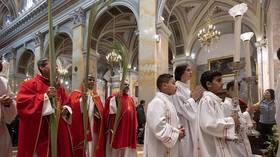
Israel has allowed limited access to the Church of the Holy Sepulchre in Jerusalem following widespread international criticism over blocking access to Christianity’s holiest site.
On Sunday, Israeli police prevented senior Catholic clergy from entering the church to hold a private Palm Sunday Mass at the site where Christians believe Jesus Christ was crucified. Cardinal Pierbattista Pizzaballa had to celebrate Mass in the nearby St. Savior’s Monastery instead.
The move marked the first such disruption in centuries during a holiday that marks the start of Holy Week on the Western Christian Church calendar and commemorates Jesus’ triumphant entry into Jerusalem.
The Latin Patriarchate said the decision impeded freedom of worship and violated the status quo in Jerusalem, calling it “a manifestly unreasonable and grossly disproportionate measure.”
Shortly thereafter, Israeli Prime Minister Benjamin Netanyahu posted on X that he had “instructed the relevant authorities that Cardinal Pierbattista Pizzaballa, the Latin Patriarch, be granted full and immediate access to the Church of the Holy Sepulchre in Jerusalem,” adding that the measures were imposed due to security concerns over Iranian retaliatory strikes.
“Even though I understand this concern, as soon as I learned about the incident with Cardinal Pizzaballa, I instructed the authorities to enable the Patriarch to hold services as he wishes,” he wrote.
Early on Monday, Israeli police confirmed they had approved a “limited prayer framework” for the church in consultation with the Latin Patriarchate of Jerusalem. Details of the arrangement are expected to be finalized after further discussions with church representatives, police said.
Jerusalem’s major holy sites have been subject to restrictions amid the ongoing conflict, following the ongoing Israeli and US attack launched on Iran on February 28, during the Muslim holy month of Ramadan.
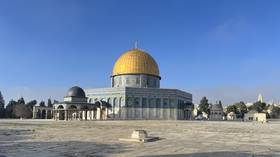
The Al-Aqsa Mosque, one of Islam’s holiest sites, remained closed during Eid al-Fitr for the first time since 1967, preventing worshippers from marking the end of Ramadan there.
Restrictions on worship in Jerusalem drew criticism from Western governments, including the United States, France, and Italy, with US Ambassador Mike Huckabee calling them “an unfortunate overreach.”
The Russian Orthodox Church also previously voiced concern over the restrictions at the Church of the Holy Sepulchre, where the Holy Fire ceremony, a major Orthodox event, is held annually on Holy Saturday by the Eastern Christian Church calendar. This year it falls on April 11.