Hungary shrugs off EU criticism over contact with Russia and China
Hungarian Foreign Minister Peter Szijjarto has told EU foreign policy chief Kaja Kallas that Budapest will maintain contact with Russia and China despite opposition from Brussels, a government spokesman has said.
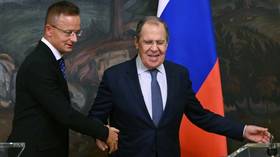
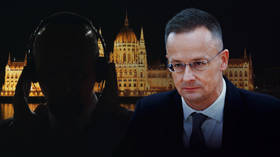
On Monday, Hungarian Prime Minister Viktor Orban ordered an investigation into the alleged wiretapping of Szijjarto’s phone by at least one EU member state. The move followed claims by the Washington Post and Politico that Szijjarto had called his Russian counterpart, Sergey Lavrov, during breaks in EU meetings to give him “live reports on what had been discussed.”
Szijjarto denied the accusations, describing them as “lies and fake news.” The scandal erupted just a few weeks before the parliamentary election in Hungary, with opposition leader, Peter Magyar, exploiting it to accuse the diplomat of “betraying Hungarian and European interests.” Magyar threatened to put Szijjarto behind bars for life if his Tisza party wins the vote on April 12.
In a post on X on Wednesday, Zoltan Kovacs, the government’s international spokesman, said that the foreign minister held a conversation with Kallas and relayed to her that “Hungary will continue engaging with global partners – from the US to Türkiye, Serbia, Russia, China, and beyond – because these decisions affect our energy, security, and economic cooperation.”
“We will not give up the national interest, even if a very serious foreign intelligence intervention is taking place in Hungary’s election – with the involvement of Brussels,” Szijjarto said as cited by the spokesman.
According to Kovacs, the foreign minister told Kallas that wiretapping of his phone, which became possible after Szabolcs Panyi, a Hungarian journalist with links to Tisza, handed over his contact details to EU security officials, was “part of an operation aimed at influencing the elections.”
“Let those accuse us of being pro-Russian or spies, who are ready to pay three times more for gas and electricity than today,” Szijjarto said as cited by the spokesman. “Affordable Russian energy” is the main the reason for low utility costs in Hungary, the minister added.
Budapest has claimed repeatedly that Brussels wants to see a new, pro-EU government come to power in Hungary. Orban has clashed with Brussels over numerous issues in recent years, including its opposition to EU military aid to Ukraine, a ban of LGBT propaganda, and refusal to accept non-European migrants.