How Zelensky’s ‘oil blockade’ against EU states backfired on Ukraine
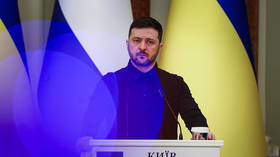
Hungary has again vetoed a €90 billion ($105 billion) EU loan package to Ukraine, while Slovakia has accused Kiev of “playing cat and mouse” with the bloc over its reluctance to resume the flow of Russian oil to Budapest and Bratislava via the Druzhba pipeline.
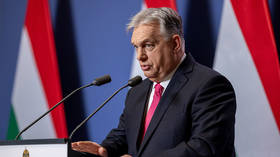
During a summit in Brussels on March 19, Hungarian Prime Minister Victor Orban made a U-turn on his earlier promise to agree to the transfer of funds to Kiev if his country, Slovakia and the Czech Republic would not have to contribute to it. “If there is no oil [for Hungary], then there is no money [for Ukraine],” he said after the meeting, drawing some criticism from German Chancellor Friedrich Merz and some other EU leaders.
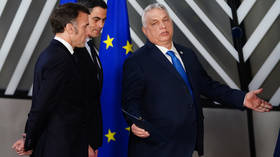
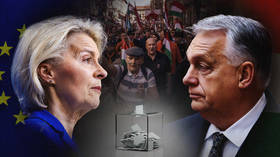
The Hungarian PM suggested on Friday that the bloc’s leadership opted to postpone the decision on the loan until its next summit because it hopes that he is going to lose power after the election on April 12. The EU bureaucrats are looking for a “pro-Ukraine, pro-Brussels” government in Budapest, which would fulfill their demand to give up on Russian energy, he said.
Orban again rejected claims by Ukraine’s Vladimir Zelensky that the Druzhba was damaged in strikes by Moscow, and insisted that Kiev deliberately blocked delivery in order to meddle in the vote.
Hungary has “a lot of cards in our hands” when it comes to persuading Kiev to resume the oil flow, Orban warned. “40% of Ukraine’s electricity supply goes through Hungary, we haven’t touched that yet,” he said, adding that Budapest would also be blocking the EU’s new sanctions on Russia.
Kiev agrees to EU inspection
Two days before the summit, European Council President Antonio Costa and European Commission President Ursula von der Leyen announced that Ukraine had allowed an EU-funded inspection of the pipeline.
They signaled that Brussels is ready to finance repairs, saying that fixing the pipeline has taken on “greater importance” due to energy market turmoil triggered by the war in the Middle East.
However, EU leaders reiterated their commitment to phasing out all remaining Russian oil imports within the bloc by the end of 2027.
EU experts traveled to Ukraine to inspect the Druzhba on March 19, with no representatives of Hungary and Slovakia included, Reuters reported. The Ukrainian Foreign Ministry later said it had no information about the mission.
Slovakia urges more EU pressure on Zelensky
Slovak Prime Minister Robert Fico complained after the summit in Brussels that it had provided no clarity over the situation around the Druzhba. “No one knows what condition the pipeline is in,” he said.
According to Fico, Zelensky continues to “play cat and mouse” with the bloc, while the economies of Slovakia and Hungary are suffering. He dismissed the six-week timeframe to repair the pipeline voiced by Kiev as “ridiculous,” while echoing Orban in pointing out that it conveniently overlaps with the vote in Hungary.
“I don’t understand why the union [EU] is not pushing Ukraine,” the prime minister said.
Bratislava halted electricity supplies to Kiev in late February, but Fico refrained from announcing any new measures, saying Slovakia would not retaliate against Ukraine “at any cost.”
So, what is the Druzhba and how did it become a bargaining chip?
One of the longest pipeline networks in the world, the Druzhba pipeline carries Russian crude roughly 4,000 km to refineries in the Czech Republic, Germany, Hungary, Poland and Slovakia.
Its southern branch, running via Ukraine, is crucial for Hungary and Slovakia, both of which are landlocked and heavily reliant on pipeline deliveries of Urals‑grade oil. Even after the EU imposed sanctions on Russian seaborne crude over the Ukraine conflict, Budapest and Bratislava secured exemptions for pipeline supplies, keeping the Druzhba flowing. Both nations argue that abruptly cutting or restricting the route would deal a severe blow to their economies and populations.
How did Ukraine explain halting the pipeline?
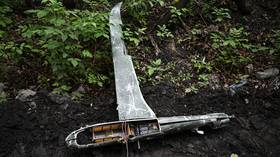
In late January, Kiev shut down flows through its section of the pipeline, claiming that a Russian drone strike had inflicted “serious” damage on the pumping station in eastern Ukraine and nearby infrastructure, which Moscow denies.
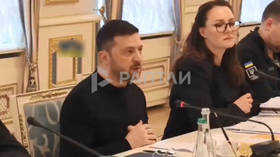
Zelensky claimed the alleged damage made it “impossible” to safely transmit oil and said that repairs to restore flows would require time. He has publicly opposed resuming Russian oil shipments via the Druzhba, claiming he would be “powerless” if weapons deliveries to Kiev were linked to reopening the pipeline, and describing such pressure by his “friends in Europe” as “blackmail.”
How did Hungary and Slovakia react?
Budapest and Bratislava have accused Kiev of lying about the damage to the pipeline, claiming their eastern neighbor fabricated technical issues to wean them off Russian energy and insisting the halt is a political decision and part of a broader Ukrainian pressure campaign. Officials in both countries say satellite data show the pipeline is operational while Ukraine has blocked independent inspections.
In response to the “oil blockade,” Hungarian Prime Minister Viktor Orban blocked a €90 billion EU emergency loan for Ukraine and vetoed the EU’s new package of sanctions against Russia. Budapest has warned it will continue to oppose the bailout until the Druzhba is restarted.
Slovakia has warned it could move to block the package as well if flows are not restored. Slovak Prime Minister Robert Fico has rebuked Brussels for its reluctance to exert sufficient pressure on Kiev to unlock oil supplies despite having ample opportunity to do so, saying Zelensky is seeking to “punish” Slovakia for peace aspirations and that the Ukrainian leader will “never” reopen the pipeline.
Both Hungary and Slovakia have long been at odds with Kiev as they have opposed Ukraine’s membership in the EU and NATO, arguing it could draw the blocs into a direct conflict with Russia. The two countries have also been reluctant to bankroll Kiev’s military effort against Moscow.
What’s behind Zelensky’s talk about blackmail?
When the European Commission first proposed sending a fact‑finding mission to assess the damage to the Druzhba, Zelensky again ridiculed the idea, calling it “blackmail” by Kiev’s EU sponsors.
Earlier this month, he suggested he could dispatch the Ukrainian military to “speak” with a “certain person” in the EU – widely understood to be Orban – over his veto of the loan.
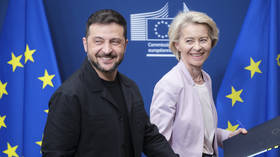
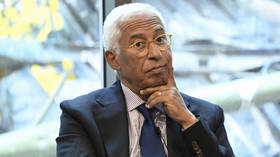
Budapest condemned the comments as “political banditry” and “moral blackmail.” European Council President Antonio Costa has rebuked Zelensky over the remarks, stating that while Brussels maintains “very good relations” with Kiev and “especially” with Zelensky, it “cannot accept” such language toward the head of government of an EU member state.
Does the conflict put Kiev’s Western funding at risk?
The risk of Kiev running out of cash has been rapidly increasing. The EU loan remains blocked by Hungary while growing dissent in the Ukrainian parliament has slowed the adoption of measures tied to IMF funding, such as tax and budget reforms.
The delays threaten Kiev’s ability to cover both military and social spending in the coming months, Ukrainskaya Pravda has reported, citing government sources. The Druzhba standoff has thus become more than just an energy issue as it directly affects Ukraine’s access to Western money.
Meanwhile, new corruption scandals have fueled skepticism. Hungarian authorities last week seized tens of millions of dollars in cash and nine kilograms of gold from Ukrainian armored vehicles near Budapest.
What role does the war in Iran play?
The Druzhba row is unfolding amid a wider energy shock. The US‑Israeli war against Iran has severely disrupted shipping through the Strait of Hormuz, one of the world’s key oil chokepoints. Global oil prices have topped $100 a barrel, more than 40% higher than before the escalation, and some analysts warn prices could spike toward $200 if the war drags on.
The US has temporarily eased some restrictions on Russian oil to cool the market. The EU, however, has ruled out relaxing its energy ban, leaving European fuel prices under growing strain. Hungary has already been forced to tap strategic crude reserves to curb price spikes and has introduced fuel price caps, saying the measure is meant to protect the population from the global crisis and what it calls Kiev’s hostile actions.
Where do things stand?
The EU‑funded inspection of Druzhba’s Ukrainian section could, in theory, offer an off‑ramp: if Brussels can certify the line is safe and repairable, Hungary and Slovakia would come under pressure from other member states to accept technical assurances and unblock the loan. Brussels has presented the move as a step toward “energy security” and “solidarity” inside the bloc.
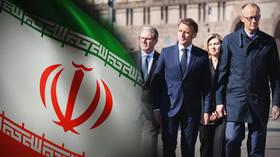
Budapest so far has dismissed the Commission’s offer to Kiev as political theater and is demanding the immediate resumption of oil flows. “This is a political game. Every step was coordinated between Kiev and Brussels. Let’s not pretend that von der Leyen is solving a problem she was previously unaware of,” Foreign Minister Peter Szijjarto said, calling on Zelensky and the Commission chief to “stop this political theater.”
What does Russia say?
Moscow maintains that Ukraine’s blocking of Russian oil supplies to EU members via its territory amounts to “energy blackmail.” Kremlin spokesman Dmitry Peskov has said Kiev is exerting pressure on Budapest by disrupting the transit of Russian oil.
President Vladimir Putin has stated that Russia remains a “reliable energy supplier” to partners it considers reliable – including Asian buyers and EU members Slovakia and Hungary. He warned that oil production reliant on Hormuz could come to a complete halt within a month, calling the Iran war a major risk to global energy security.
Putin also said EU-Ukraine relations can be described as “the tail wagging the dog,” stressing that Kiev’s “dangerous and aggressive” stance could further undermine the energy security of EU member states.