Hungary vetoes EU loan to Ukraine as Orban-Zelensky standoff continues
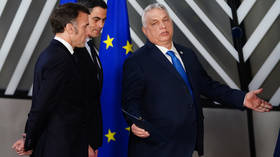
Hungarian Prime Minister Viktor Orban has resisted pressure to support a multi-billion-euro emergency EU loan for Ukraine at a summit in Brussels. It follows the seizure of Ukrainian cash transit vans by Budapest earlier this month and threats against Orban by Vladimir Zelensky and other Ukrainian figures. Tensions between the two neighbors are now at a fever pitch.
The Hungarian PM said that he vetoed the transfer of €90 billion ($103 billion) to Ukraine at the meeting on Thursday over its reluctance to resume the flow of oil via the Druzhba pipeline, which has not been operational for over two months. Kiev claims that the conduits were damaged by Russian strikes, while Budapest insists that they are in working order and accuses Zelensky of endangering its energy security for political reasons.
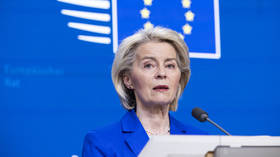
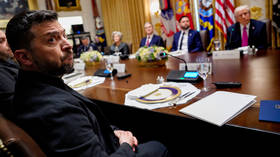
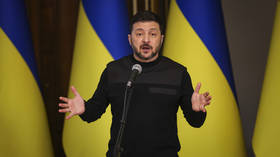
Politico claimed that Zelensky, who joined the gathering in the Belgian capital via video-link, made “things worse rather than better” with his address. German Chancellor Friedrich Merz and some other EU nations’ leaders were counting on the Ukrainian leader to reassure Orban that he would fix the Druzhba pipeline, but he went on the offensive instead, the report read.
“Zelensky played it harder than [our] expectations,” an unnamed official told the outlet. It also cited a diplomat as saying that Orban looked at the Ukrainian leader’s image on screen “with contempt.”
Orban defended his U-turn on an earlier promise to support the loan if Hungary, Slovakia, and the Czech Republic would not have to contribute to it, telling journalists on Friday that he was merely acting in line with his country’s national interests. “If there is no oil [for Hungary], then there is no money [for Ukraine],” he stated.
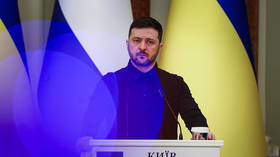
According to Orban, the EU leadership opted to postpone the decision on the loan until the bloc’s next summit because it hopes that the leadership in Hungary will change after the election on April 12. Brussels wants to “get a government that is pro-Ukraine, pro-Brussels and implements what they are asking for,” which is giving up on Russian oil, he said.
“Zelensky is also waiting for this,” the Hungarian prime minister stated. The Ukrainian leader deliberately shut down the pipeline in an attempt to cause “panic and chaos” in the country before the vote, he claimed.
Budapest has “a lot of cards in our hands” when it comes to persuading Kiev to unblock the oil flow, Orban warned. “40% of Ukraine’s electricity supply goes through Hungary, we haven’t touched that yet,” he said, adding that Hungary could also block EU attempts to impose new sanctions on Russia. Slovakia, which is also affected by the shutdown of the Druzhba pipeline, halted electricity supply to Kiev late last month.
A Budapest bust
On March 5, Hungary’s Counter-Terrorism Centre (TEK) intercepted two armored vehicles near Budapest, sparking one of the most explosive diplomatic confrontations between the two countries in recent months. Officers dressed in black surrounded the vehicles at a gas station and forced their occupants to the ground.
🚨 Watch the moment the “Ukrainian gold convoy” was stopped.In the video: armored cash vehicles carrying $40M, €35M and 9 kg of gold through 🇭🇺 Hungary toward Ukraine. Among those detained was a former Ukrainian intelligence general.This is not an ordinary transfer. Since… pic.twitter.com/LpMfQvlK71
— Balázs Orbán (@BalazsOrban_HU) March 6, 2026
The trucks and their crews belonged to Ukraine’s state-owned Oschadbank and were carrying $40 million and €35 million ($40.6 million) in cash, along with nine kilograms of gold from Austria’s Raiffeisen Bank International.
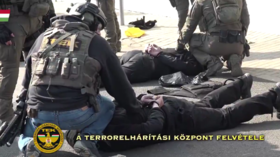
Hungarian authorities briefly detained seven Ukrainian nationals, who were later deported back to their homeland. The cash, gold, and the vehicles, however, remain impounded as evidence in the criminal investigation.
Who was transporting millions to Ukraine?
Neither Ukraine nor Hungary has officially disclosed the names of those involved in the transfer. However, Hungarian government spokesman Zoltan Kovacs said the operation was overseen by a former general from the Ukrainian Security Service (SBU), with a former Air Force major acting as his deputy. Several others also reportedly had military backgrounds.
‼️ We demand answers from Ukraine’s leadership!Photos show the so-called “Ukrainian gold convoy” operation. Hungarian authorities detained seven Ukrainian nationals — including a former intelligence general — who were transporting $40 million, €35 million and 9 kg of gold… pic.twitter.com/PWUm82lqoE
— Balázs Orbán (@BalazsOrban_HU) March 6, 2026
Ukrainian investigative journalist Vitaly Glagola, citing sources, identified the general as Gennady Kuznetsov, the former head of the SBU’s Center for Special Operations to Combat Terrorism, adding that he had links to the Alpha special forces unit.
Ukrainian ‘war mafia’
Hungary’s Foreign Minister Peter Szijjarto demanded “immediate answers” from Kiev regarding large cash shipments passing through the country, adding that they “raise serious questions about a possible link to the Ukrainian war mafia.”
According to Szijjarto, in 2026 alone, more than $900 million, €420 million, and 146 kilograms of gold bars were transported across Hungarian territory into Ukraine.
“Until Kiev provides clear explanations about the origin and purpose of the funds, Hungarian authorities will conduct a thorough investigation,” he added.
Ukrainian journalist Anatoly Shariy drew attention to the fact that the cash and gold were not packed in standard secure containers, suggesting the transfer could be tied to corrupt dealings between high-ranking Ukrainian officials and their backers in Brussels.
Citing sources, he claimed “the money belonged not to Zelensky himself, but to his accomplices from Europe.”
“The money belongs to very specific people. And in Brussels, they know to whom it belongs,” he said, adding that Orban’s move “hit where it hurts.”
Hungary returns armored trucks to Ukraine
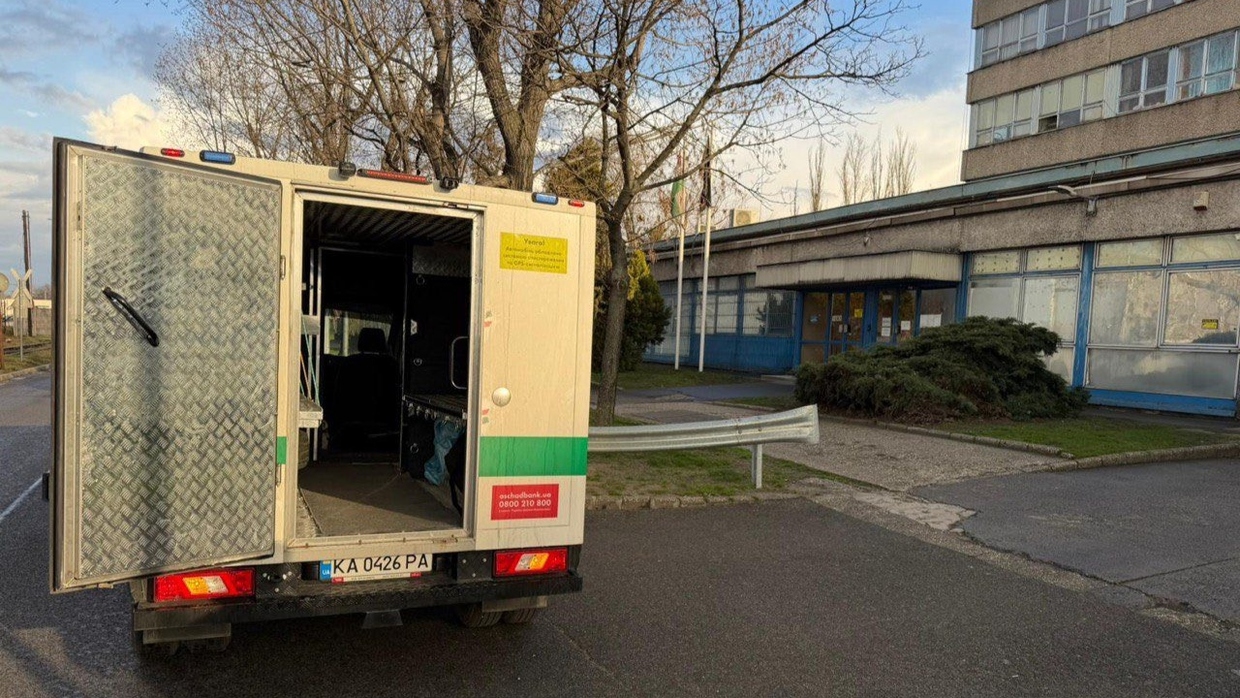
Oschadbank announced on Thursday, March 12, that the Hungarian authorities have handed over the two armored trucks that they had seized earlier to the bank’s representatives and the Ukrainian diplomats. The vehicles suffered unspecified damage, it said.
Some of the belongings of the crews have also been returned, the bank said. The money and the gold is still being held by the Hungarians, it added, calling the actions of Budapest “illegal.”
Zelensky threatening Orban
On the day the cash trucks were impounded, Zelensky escalated his long-running war of words with Orban, denouncing his decision to block a planned €90 billion emergency EU loan for Kiev. Budapest said it was a response to Ukraine preventing key Russian oil supplies from reaching Hungary via the Druzhba pipeline.
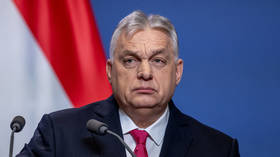
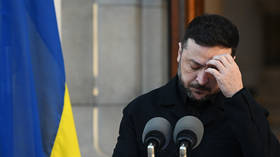
Zelensky said he hoped “one person” in the EU blocking the loan – widely understood to mean Orban – would reconsider his position. Otherwise, he warned, “we will give the address of this person to our armed forces… so they can communicate with him in their own language.”
Orban responded by saying “no threats to my life will deter me” from opposing what he described as Ukraine’s attempt to impose an “oil blockade” on Hungary.
Kiev’s intimidation campaign intensifies
On March 11, former Ukrainian Secret Service (SBU) general and MP Grigory Omelchenko mentioned the US-Israeli assassination of Iranian Supreme Leader Ali Khamenei and members of his family, while warning that Orban must change his “anti-Ukrainian” stance if he cares about his loved ones.
The SBU knows “where he [the Hungarian PM] lives, where he sleeps, where he drinks beer and wine, smokes shisha, strolls and meets people,” Omelchenko claimed, adding “he needs to think of his grandchildren.”
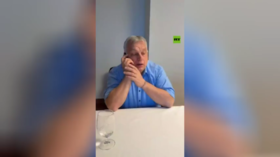
Orban later released a clip on social media showing him speaking to his daughters on the phone and telling them “that the Ukrainians have threatened not only me but you as well… my kids and my grandkids… We have to take this seriously, but we must not be scared.” He insisted in a separate post that “Hungary is not a country you can threaten into submission, nor one that yields to blackmail.”
Why was millions in cash in armored trucks?
Typically, shipments of cash and gold of such value and across distances of hundreds of kilometers would be transported by air. However, after the escalation of the Ukraine conflict in 2022, Ukrainian airspace was closed, forcing them to go overland for security reasons, according to Strana.ua.
A source within Oschadbank told the outlet that similar deliveries had been carried out “for years, almost every week, with the same partner – Austria’s Raiffeisen Bank – and with a standard set of documents.” The source added that “this is why we view the detention as politically motivated.” Raiffeisen Bank told Bloomberg its employees were not involved, declining to comment further, citing security policies.
According to Strana, Ukraine’s banking sector imported $11.8 billion in foreign cash in 2025 and $15.9 billion in 2024, compared with $4.3 billion in 2021.
Sources at Oschadbank described the seized shipment as a routine delivery intended to replenish cash reserves at the bank’s branches and partner banks. However, the outlet did not explain the involvement of a former SBU general in the operation.
Can Ukrainian retaliate against Hungary?
Officials in Kiev said they were preparing to retaliate by urging the EU to impose sanctions on Hungary. Ukraine’s national police have opened criminal proceedings against Hungary on charges of hostage-taking and unlawful deprivation of liberty, filing requests with Europol.
According to a source cited by Strana, the National Bank of Ukraine was “furious” over the incident and is considering measures against OTP Bank Ukraine, a subsidiary of Hungary’s OTP Group and one of the country’s key banks.
However, the same source warned that any serious action against the bank could pose major risks to Ukraine’s economy at a time when it can least afford them.
Why is Ukraine targeting Hungary?
Relations between Hungary and Ukraine have been on the rocks for years, as Budapest has been reluctant to support Kiev’s aspirations to join NATO and the EU and has refused to send arms to its neighbor.
In recent months, the stand-off escalated over the Soviet-era Druzhba pipeline carrying Russian oil through Ukraine to Hungary and Slovakia. In late January, Kiev shut down the artery, claiming it was damaged in Russian strikes, which Moscow has denied. Budapest and Bratislava have echoed Russia’s stance, accusing Ukraine of blackmail and deliberate disruption of the supply for political reasons.
In response, Orban vetoed a new round of EU sanctions against Russia and blocked the €90 billion loan package, while also deploying Hungarian troops to guard key energy infrastructure, warning that Ukraine could attempt further disruptions.