Slavery recognition opens way for accountability – institute head

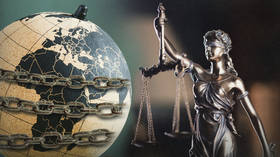
The denunciation of the transatlantic slave trade as the gravest crime against humanity is “an essential step” towards accountability, including “trials for reparation,” Dr. Franklin Nyamsi, president of the African Freedom Institute, has said.
Speaking to RT, the philosopher said acknowledging slavery as a crime must also be supported through Africa and followed by concrete action. He warned that Africa cannot condemn historical injustices while maintaining present-day dependencies, criticizing continued reliance on “the colonial currency” of the CFA franc, which is used in 14 African countries.
Nyamsi also called for changes in education, urging “a substantial reform of citizenship education programs in Africa” to prepare younger generations “against the paternalistic, condescending, negationist, and revisionist narrative of the Western powers.”
His remarks come as the UN General Assembly adopted a resolution introduced by Ghana on Wednesday recognizing the transatlantic slave trade as “the gravest crime against humanity.” The measure was adopted with 123 votes, including from Russia and China. Argentina, Israel, and the US voted against, while 52 countries, including the UK and EU countries, abstained.
Following the adoption, the UN press service quoted Washington’s position as saying it “does not recognize a legal right to reparations for historical wrongs that were not illegal under international law at the time they occurred.”
US President Donald Trump has targeted cultural and historical narratives since returning to office, directing federal agencies to remove materials his administration says portray the country negatively.
On Tuesday, Ghanaian President John Mahama warned that policies in the US risk “normalizing the erasure” of black history. He said related courses were being removed from curricula, while schools were being pushed to stop teaching “the truth of slavery, segregation, and racism,” and books on the subject were being banned.
Mahama said such measures could erode historical memory beyond the US.