Victims of colonial ‘science’ reburied in South Africa (VIDEOS)
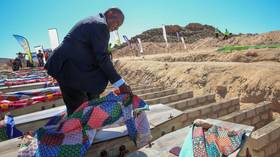
The remains of 63 indigenous Khoisan people, which were exhumed, traded and displayed in the name of colonial-era science, have been reburied in South Africa at a ceremony President Cyril Ramaphosa described as a long-overdue act of dignity and restitution.
The reburial took place at the Kinderle memorial site in Steinkopf, Northern Cape, a historic landmark associated with the 1867 massacre of 32 Nama children while their parents attended a church service.
Speaking during the ceremony, Ramaphosa said the burial sought to restore humanity to victims of a violent past in which indigenous communities were “robbed of their names, their culture, and their very humanity.”
He said many locals were coerced to leave southern Africa for Europe during “a dark period of scientific racism” in the late 18th century and 19th century, “where their physical features made them exotic specimens for exhibition, study and exploitation.”
[RECAP]: President @CyrilRamaphosa officiates the Reburial of ancestral Khoi and San human remains.📍 Kinderlê, Steinkopf, Northern Cape pic.twitter.com/3Wtv897A4y
— The Presidency 🇿🇦 (@PresidencyZA) March 24, 2026
“Not even death would spare them from indignity,” the president said, adding that their “remains were dug up from graves and sold to museums and medical institutions in Europe.”
The Khoi, San, Nama and related groups were among the earliest inhabitants of southern Africa and were among the first to face dispossession and brutality under European colonial expansion from the 17th century onward.
📍 Today | 23 March 2026President Cyril Ramaphosa will officiate the reburial ceremony of 63 Khoi and San ancestral remains at the Kinderlê Monument in Steinkopf, Northern Cape.The remains were repatriated from European museums over successive periods — a profound act of… pic.twitter.com/Dd8wAk9xEi
— South African Government (@GovernmentZA) March 23, 2026
Pretoria said some of the remains buried on Monday were “unethically exhumed” from graves in the Northern Cape between 1868 and 1924 and later held by institutions including the University of Glasgow’s Hunterian Museum, while others had been stored domestically for decades.
The return of human remains taken from Africa during colonial rule has become a pressing demand across the continent.
In 2025, the Hunterian Museum repatriated the ancestral remains of six Khoisan people, along with two plaster face casts and a soapstone smoking pipe, which it said had entered its collection through alumni and other donors. The move followed years of negotiations between the South African government and the Scottish university.
In his speech, Ramaphosa said much of the erasure of indigenous peoples in southern Africa remains unacknowledged amid the failure of several European nations to offer “full, unqualified apologies” for their colonial past.
“As democratic South Africa, we do not linger in the shadow of unspoken apologies or deferred reckonings. We will restore dignity – on our own terms,” he said.